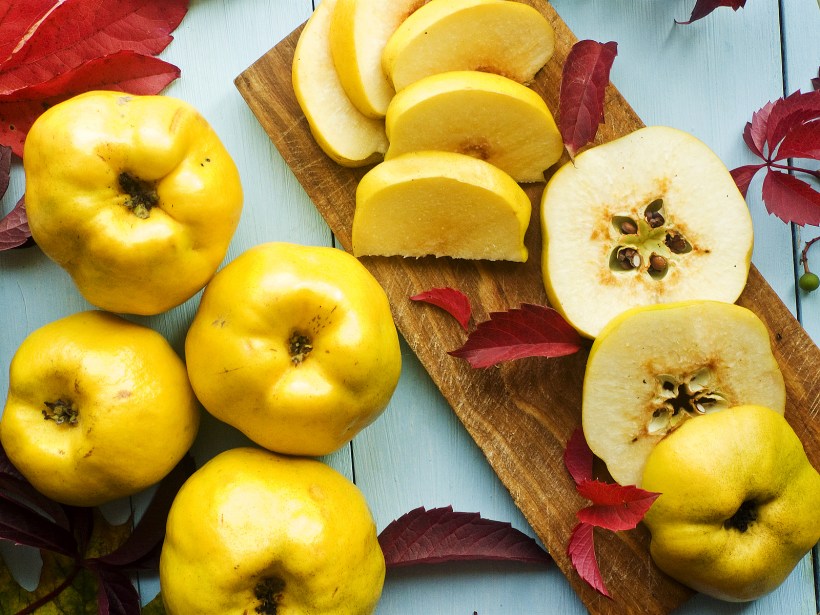
Let’s face it, Quince is not inviting. It’s tough, greenish yellow, and woody, and unlike myself, most people feel Quince is useless. But hold on! If you allow it, this old-world fruit will ripen to a floral, sweet with an amazing perfume that develops and continues to deepen in fragrance. Related to apples and pears, Quince has a deep floral aroma. Its firmness pairs well with pork; its syrup can accompany cakes, tarts, boozy drinks, and even Champagne!
Every year, as a young Pastry Chef in Sonoma, California, I could not wait for the locals to come by discarding crates of their fresh-picked ( off the ground, most likely) Quince on the restaurant’s back doorstep. The staff would drop them off in my bakeshop. It wasn’t easy, but we developed a relationship out of necessity, plus I needed to keep my job. From then on, I’ve looked forward to Winter, only to see Quince on my year-end menu.
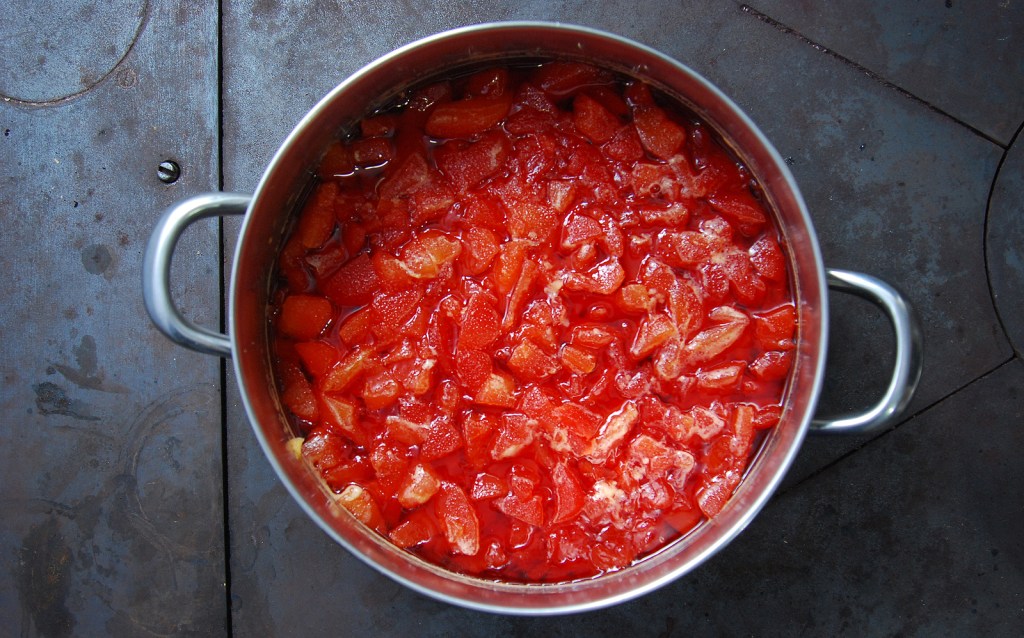
When cooked, quince takes on some of the best attributes of its sister fruits—pears’ floral aroma, apples’ firmness—oh, and quince also surprises you when it reveals a startlingly coral-like pink tone when you least expect it. Quince feels magical. The longer it sits in poaching liquid, including storage, cooked Quince will significantly turn deeper in beautiful hues of rose and Burgundy tones.
Such a weird fruit! Quince is perfectly ripe when it is deeply yellow, not greenish-yellow, and besides the hints of sweet fragrance, Quince won’t soften over time, so don’t let it fool you.
Poaching in liquid and sweetener is the best way to wrangle this exotic comeback. I like to use spirits, aromatics, and other fruits juice. But not too many flavors. That will confuse this precious fruit. Poaching gives a great return, including a surprisingly beautiful, aromatic, fragrant syrup, which is good for many things. Not to mention, your bartender will be willing to make a good trade. You can make a variety of flavors based on the spices and poaching liquids you use.
Because the fruit has lots of natural pectin, when reduced it produces a honey-like syrup in a saucepan, the liquid is exceptionally beautiful and thick and makes a lovely, nectar for drizzling or glazing hams, or fruit tarts, spritzers, or to make candies with. Everyone puts their twist on flavoring this fruit. I love a very small knob of fresh ginger slipped into the poaching liquid, complementing the sweet fruit with a spicy kick. I’ve also been known to add occasional chili pepper.
The bottom line is Quince pairs well with savory fall dishes, so try flavoring it with a sprig of rosemary, thyme, or sage in anticipation of serving it with pork tenderloin or baked sweet potatoes. The syrup has so many uses, too. Drizzle it on fresh fruits, cakes, ice cream, even Champagne. O-M-G! My mouth is watering!
You’ll Need
4-5 fresh quince
1/4-1/2 cup sugar
3 teaspoons local honey
1 tablespoon light brown sugar or maple syrup
A large strip of lemon or orange peel
1 cinnamon stick
1-2 whole cloves
1 cardamom pod smashed
Fresh vanilla bean, cut open; do not scrape
4-5 black peppercorns, whole
1/2 lemon, juiced
1-2 cups sweet white wine
Water to cover
1/4 inch coin of fresh ginger, peeled and smashed

Here’s How
Peel the quince and place it in a bowl of water with a squeeze of lemon. Set aside. Slice off any weird spots. Quince is not much of a commercial crop, most of the quince you will see will be locally-grown so expect to see some spots. Use a small, sharp paring knife or the little eye remover on your potato peeler. Return the manicured quince into a bowl of lemon water to prevent browning.
Managing one whole piece at-a-time. Cut the quince in half with a sharp, heavy chef’s knife. Be sure your cutting board is secure with a damp paper towel underneath to prevent moving; the fruit is very tough and will be difficult to cut, so be careful. Slice into quarters, lay each quarter piece flat on one side, and cut away the core and any seeds by using the tip of your knife, or a small round cookie cutter. return to the water bath until all slices are groomed. Set aside.
Prepare the poaching liquid above and add any additional flavorings you desire.
Add the quince and cover with a fitted cut-out parchment round making direct contact with the fruit. If you don’t have parchment you can cover the pan loosely with a lid instead. The goal is to keep most of the liquid from evaporating while cooking the quince but to still let it reduce a little bit into a sweet syrup.
Bring to a boil then reduce the heat and simmer for about 50- 60 minutes or until the quince is turning pink and is tender when poked with the tip of your knife. Remove from the heat, strain reserving the liquid. Use it right away, or refrigerate the quince in the poaching liquid for up to a week. Place quince in a jar and use it as jam if you wish.
Pro Tips:
Quince can also be frozen, with or without its liquid.

 Chef Gigi Gaggero
Leave a comment